
Batteries are essential for powering modern devices, from household electronics to industrial systems. Among the most common battery types are lithium-ion batteries and alkaline batteries. While both store electrical energy, they differ greatly in performance, lifespan, and applications.
1. Basic Overview
Lithium-Ion Batteries
Lithium-ion (Li-ion) batteries are rechargeable batteries that use lithium-based compounds as active materials. They are commonly used in smartphones, laptops, power tools, electric vehicles, energy storage systems, and UPS applications.
Alkaline Batteries
Alkaline batteries are non-rechargeable (primary) batteries that use zinc and manganese dioxide with an alkaline electrolyte. They are widely used in low-power household devices such as remote controls, clocks, toys, and flashlights.
2. Key Differences
| Feature | Lithium-Ion Battery | Alkaline Battery |
|---|---|---|
| Rechargeable | Yes | No |
| Nominal Voltage | 3.6–3.7V per cell | 1.5V per cell |
| Energy Density | High | Low |
| Weight | Lightweight | Heavier |
| Lifespan | 500–2000 charge cycles | Single use |
| Long-Term Cost | Lower | Higher |
3. Performance and Energy Density
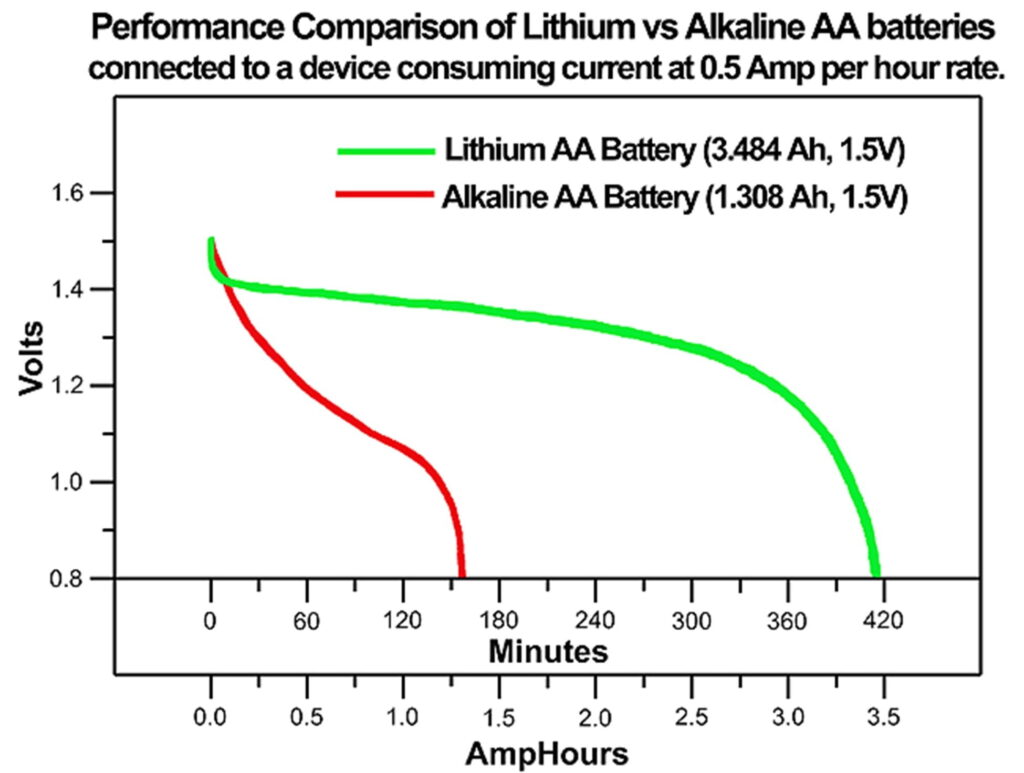
Lithium-ion batteries provide higher energy density, allowing them to store more energy in a smaller and lighter form. This makes them ideal for portable and high-power devices.
Alkaline batteries have lower energy density and experience voltage drop during discharge, which limits their effectiveness in high-drain applications.
4. Lifespan and Rechargeability
Lithium-ion batteries are designed for repeated charging and can last several years with proper use. This makes them suitable for devices that require frequent and reliable power.
Alkaline batteries are disposable and must be replaced once depleted, leading to higher long-term usage costs.
5. Cost Comparison
Alkaline batteries have a lower upfront cost and are convenient for occasional use. Lithium-ion batteries have a higher initial cost but offer better value over time due to their long service life and reusability.
6. Environmental Impact
Lithium-ion batteries generate less waste because they are rechargeable, but they must be properly recycled. Alkaline batteries are often discarded after a single use, increasing environmental waste.
7. Safety Considerations
Lithium-ion batteries require battery management systems to prevent overcharging and overheating. When designed correctly, they are safe and reliable.
Alkaline batteries are simpler and generally stable, but they can leak if stored improperly or used beyond their shelf life.
8. Application Scenarios
Use Lithium-Ion Batteries When:
- High energy density is required
- Devices need frequent recharging
- Weight and size are important
- Long-term cost efficiency matters
Use Alkaline Batteries When:
- Power consumption is low
- Usage is infrequent
- Low upfront cost is preferred
- No charging equipment is available
9. Conclusion
Lithium-ion batteries and alkaline batteries serve different purposes. Lithium-ion batteries are ideal for high-performance and long-term applications, while alkaline batteries remain practical for simple, low-drain household devices.